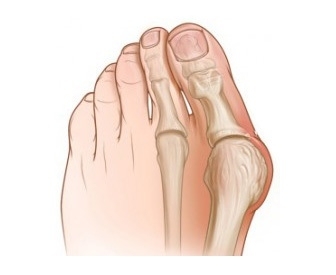
Hallux Valgus is often described as a bump on the side of the big toe and is the commonest forefoot deformity, with an estimated prevalence of 30% of the population.
For many people, running or walking outdoors in total peace, it's a dream difficult to achieve.
Hallux Valgus is a deformity, the valgus deviation of the great toe often results in a lack of space for the other toes, the result is a chronic inflammation and in the most severe cases can occur a deviation of the other fingers.
Nowadays is not exactly clear what causes this disease, but it assumes a genetic susceptibility associated with an emotional form linked to the loss of security, however, it’s not correct- as often happens - say that the bunion is hereditary.
Women are much more commonly affected than men, because they frequently wear high-heeled and narrow shoes;
In fact an important tip is to avoid foot pain from high heels, a thicker heel will give you better balance and may help relieve some pressure.
A flat foot (or valgus) definitely affects the length of ligaments and muscles, as a consequence the forefoot fans-out, giving rise to the typical protuberance that characterizes this disease.
Symptoms:
People complain of constant pain that alters significantly the quality of life. (A common condition in 30% of people after the age of 40) The most common symptom is pain, which is acute even at rest, later is also manifested in swelling and redness.
Treatments:
There are several possible treatments to treat hallux valgus : can be useful a cold massage, the administration of anti-inflammatory creams and infiltration of extra-articular corticosteroids.
There are also non-invasive corrective measures such as gymnastics and comfortable shoes, which can help a lot.
An advanced deformation is characterized by acute and continuous pain, and it can be corrected only by surgery.
The Bunion Splint is a corrective orthotic device that progressively improves the aesthetic and functional aspect of the foot (it should be used to avoid a future surgery).





























 Cosa Aspetti? Provala Subito!